The short answer: solve the cause of poor sleep, not only the hours
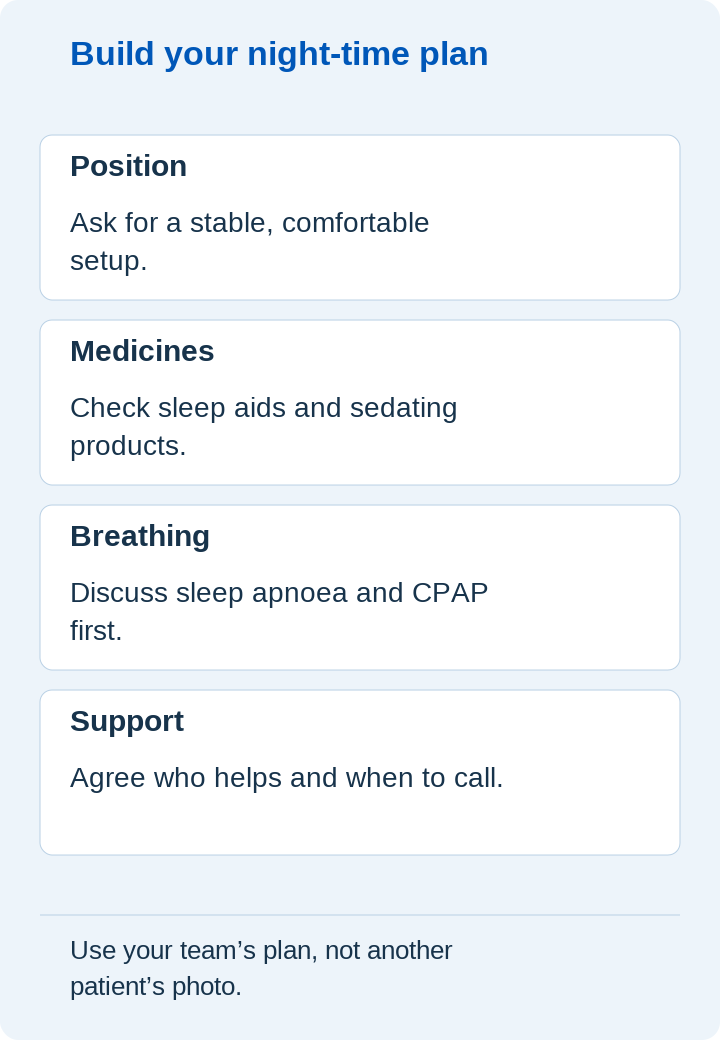
After V-line surgery, discomfort, an unfamiliar sleeping position, medicines, anxiety and travel can all disturb rest. Start with the surgical team's positioning and medication plan, then make the room and routine easier to manage. Do not add sleeping tablets, alcohol or sedating remedies without checking the postoperative medicines and your breathing risks. Poor sleep deserves attention, but an unusually difficult-to-wake person is not simply catching up on rest.
Use one overnight example when describing poor sleep
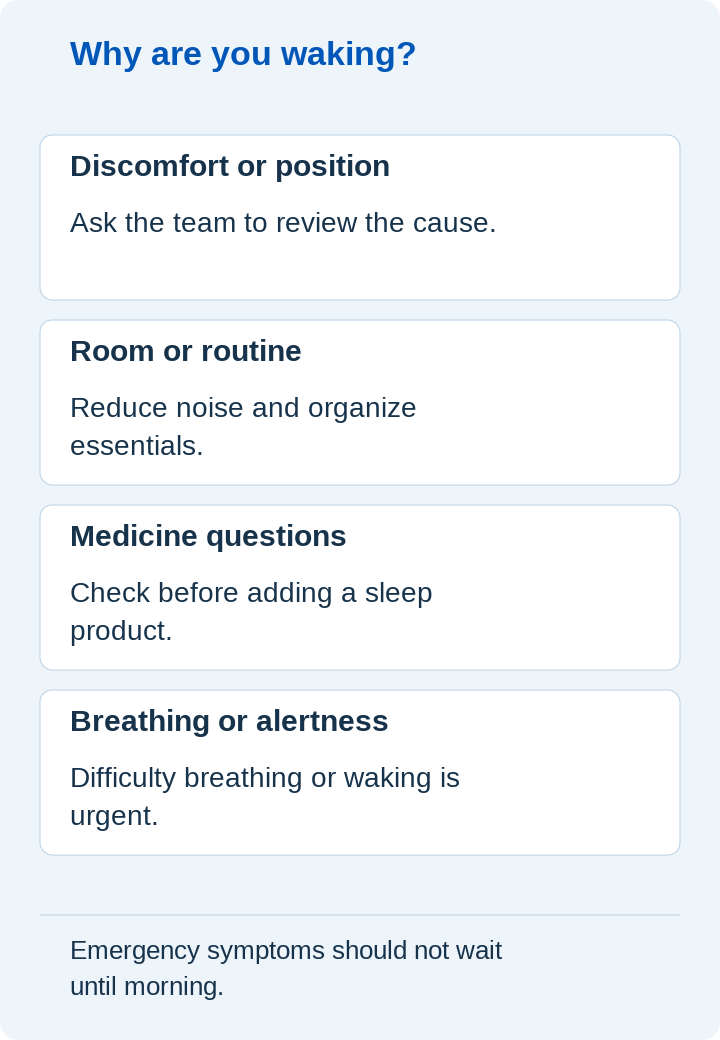
When you tell the team that you barely slept, describe what woke you. Did you wake because your face pressed into the pillow when you turned, because discomfort returned before the next prescribed dose, or because breathing felt difficult? Explain whether the problem continued once you sat up and whether it is happening while you are awake. Different problems need different assessment; buying a firmer pillow may only change the first. Get emergency help for difficulty breathing rather than waiting for a scheduled review about sleep.
This guide concerns ongoing sleep and comfort after discharge. It complements, rather than replaces, the separate first-night monitoring instructions. Breathing difficulty, rapidly increasing swelling, severe bleeding or inability to wake normally needs immediate medical help. In Korea call 119. Do not wait for a morning review or a message reply if the problem may be an emergency. The sources explain general medical principles, sometimes for related jaw operations. The questions, checklists and travel-planning suggestions here are original editorial aids, not protocols issued by those organizations.
Further reading: www.nhs.uk ↗ · www.gov.uk ↗ · www.gov.uk ↗
Ask for an explicit positioning plan
Do not guess how much elevation or which sleeping position is appropriate for your operation. Ask the surgical team to demonstrate the arrangement they want and explain how long it should continue. If you normally use a breathing device at night, discuss this before surgery because facial procedures may affect its use. Your usual habits, neck comfort and other medical conditions all matter; a photograph of another patient’s pillow arrangement is not an individualized prescription.
Further reading: myoms.org ↗ · www.uhsussex.nhs.uk ↗
Set up the room before surgery
Keep drinking water if permitted, your phone, instructions and a light within easy reach. Make the route to the bathroom clear and avoid loose cables or luggage on the floor. If you share a room, discuss nighttime support and privacy in advance. Choose bedding that can be adjusted without effort. The aim is to reduce unnecessary decisions and awkward movements when you are tired, not to buy a large collection of specialized recovery products.
Further reading: www.nhs.uk ↗
Separate rest from immobility
Rest does not mean spending every waking hour in bed unless the team has instructed you to do so. Ask what gentle movement is appropriate and how to balance it with fatigue. Schedule demanding phone calls and administrative tasks for another time. Recovery can disrupt usual sleep patterns, so keep expectations modest. If you are struggling to sleep, explain the cause—pain, anxiety, positioning or another symptom—rather than adding a sedating product independently.
Further reading: myoms.org ↗
Review medicines before adding sleep aids
Tell the clinician about any sleeping tablets, sedating antihistamines, herbal remedies or recreational substances you use. A product that seems familiar may interact with postoperative medicines or impair alertness. Do not use alcohol as a sleep aid. Ask whom to contact if pain control does not allow rest. A medication review is more useful than simply asking for something stronger, particularly when several drugs have already been prescribed.
Further reading: www.gov.uk ↗
Plan for the following morning
Keep the morning simple: the prescribed care routine, suitable food, hydration and any scheduled review. If a companion is helping, agree on how they should check on you without repeatedly interrupting sleep. Slow or difficult breathing, unusual difficulty waking, or marked unresponsiveness needs immediate emergency care, not reassurance that you are merely tired. Call local emergency services; in South Korea, call 119. For ongoing sleep disruption without an emergency, contact your care team so the plan can be adjusted around the actual problem.
Further reading: www.gov.uk ↗ · myoms.org ↗ · www.gov.uk ↗
Consider the demands of the room itself
Before booking, ask whether there is construction, nightlife noise or another likely disturbance near the room. Request a room arrangement that allows your companion to help without repeatedly moving furniture or turning on bright lights. If you use earplugs or an eye mask, ensure they do not interfere with the team’s instructions or with a helper contacting you. Keep the temperature comfortable rather than assuming a very warm room promotes healing. These are ordinary environmental choices, but together they can reduce frustration when you cannot use your preferred sleeping position and are adjusting to a temporary routine.
Further reading: www.nhs.uk ↗
Why no single pillow arrangement fits every operation
Some hospital instructions for orthognathic surgery, a related but different operation, recommend an elevated head position, but they do not establish one angle or duration for every cosmetic contouring patient. The exact procedure, other surgery, neck comfort and breathing history matter. Ask the team to show a stable arrangement and explain what to do if it causes pain or you keep slipping out of position. Avoid copying a dramatic pile of pillows from a recovery photograph.
Ask separately about side sleeping, pressure on the face and any garment used at night. Do not tighten a compression garment to stop yourself turning over. If you cannot tolerate the instructed position, contact the team for an alternative rather than enduring worsening symptoms or assuming the instruction is optional. The goal is an agreed plan that you can actually follow in the room where you will recover.
Further reading: myoms.org ↗ · dchft.nhs.uk ↗
Discuss sleep apnoea and breathing equipment before surgery
Tell both the surgeon and anesthesia team if you have sleep apnoea, use CPAP, have witnessed pauses in breathing or have previously had breathing problems after anesthesia. Bring the details of your equipment and usual treatment to the preoperative discussion. Surgery and sedating medicines can change the monitoring and pain-management plan for people with sleep apnoea.
Facial surgery also makes the fit and timing of a mask a specific question. Do not independently stop prescribed CPAP, restart it against instructions or change its pressure to make it more comfortable. Ask the surgical and anesthesia teams to agree on what you should use and what happens if it is temporarily unsuitable. If this plan is not clear before discharge, ask for clarification while clinical staff can still assess your needs directly.
Further reading: www.uhsussex.nhs.uk ↗
Keep the medication discussion practical and complete
List every product you normally use for sleep, anxiety, allergies or pain, including non-prescription and herbal products. Give the list to the prescriber rather than assuming a familiar medicine is harmless after an operation. Opioids and benzodiazepines or similar sedating medicines can have additive effects on breathing and alertness. This is a reason for supervised prescribing, not a reason to abruptly stop a regular prescription without medical advice.
Ask what to do if pain wakes you and whether the prescribed schedule should be reviewed. Do not take extra doses to force sleep or combine products from different brands without checking the ingredients. If swallowing tablets is difficult, ask a pharmacist about the exact formulation; do not crush tablets indiscriminately. Keep the medication record available so a companion or urgent-care clinician can identify what was taken.
Further reading: www.gov.uk ↗
Make a quieter evening without turning recovery into a sleep test
Choose a simple wind-down routine that works within your surgical restrictions. Dim the room, put practical supplies in reach and reduce stimulating phone use if it keeps you awake. Avoid using alcohol to relax into sleep. If caffeine is part of your day, discuss whether changing its timing would help. Keep expectations flexible: one disrupted night does not tell you whether the surgical result will be good or bad.
Ordinary insomnia advice is not a strict postoperative program. You may need daytime rest, scheduled medicines or monitoring that would not feature in general sleep advice. Do not deny yourself necessary rest to meet a rule from an app. Focus on a workable pattern and let the clinical team know if sleep loss is persistent or is making daily care, eating or concentration difficult.
Further reading: www.nhs.uk ↗
Use a brief note to identify what is waking you
If sleep remains difficult, record the main reason for waking: pain, dry mouth, room noise, worry, discomfort in the neck, or a breathing concern. Note which prescribed medicines were taken and whether the symptom is new or changing. You do not need an elaborate tracker or repeated night-time photographs. A short, accurate note can make a clinical conversation much more useful than saying only that you slept badly.
Do not let the record delay care. Breathing difficulty or unusual unresponsiveness needs immediate help; severe or worsening symptoms should not be watched overnight simply to complete a diary. For non-emergency problems, ask the team which part of the plan can be adjusted. Sometimes the useful next step is a wound or medication review, not a stronger sleep medicine or another recovery product.
Further reading: www.nhs.uk ↗ · www.gov.uk ↗
Agree on what a companion should do
A companion can help keep the room organized, understand the written instructions and recognize when to call for help. They should know the clinic's urgent contact route, the accommodation address and the local emergency number. Ask the team what supervision is required for your specific discharge plan rather than expecting a friend to invent a monitoring schedule. A companion is not a substitute for a clinical setting when professional observation is needed.
Discuss privacy and practical tasks before the operation: who keeps the medicine record, who helps with transport and whether you want assistance contacting the clinic. If you are traveling alone, tell the team early so discharge and accommodation arrangements can be assessed. Hotel reception or a messaging service should not be assumed to provide overnight medical supervision.
Further reading: www.cdc.gov ↗ · myoms.org ↗
Separate comfortable rest from clearance for work or travel
Sleeping a little better is encouraging, but it does not establish readiness for a flight, driving or a full working day. You may still have restrictions related to medicines, wound healing, energy or follow-up. Equally, needing rest does not mean you should remain completely immobile without discussing appropriate daily movement. Ask for advice that balances the different parts of recovery.
Keep meetings, demanding decisions and long social calls flexible while you establish a routine. If your job requires concentration or safety-critical tasks, discuss the practical demands with the clinician. Plan the journey home around medical review and a care handover rather than the first night you feel rested. A comfortable hotel room is useful support, but it cannot replace an agreed clinical plan or make an unsafe travel schedule appropriate.
Further reading: www.cdc.gov ↗ · myoms.org ↗
Common questions about sleep after V-line surgery
When can I sleep on my side? Ask the surgeon about your operation and any pressure restrictions. A fixed day from another patient's account is not clearance.
Should I take an over-the-counter sleep aid? Check first with the prescriber or pharmacist, particularly if you take pain medicine or have sleep apnoea. Non-prescription does not mean free of interactions.
Is snoring after surgery harmless? New or concerning breathing changes need assessment. Do not diagnose the cause from a recording or assume that all noise is expected swelling. Breathing difficulty is urgent.
What if I cannot sleep for several nights? Contact the team to review discomfort, medicines, positioning and other causes. The aim is to solve the problem while keeping you safe, not to tolerate worsening symptoms until a predetermined recovery date.
Further reading: www.nhs.uk ↗ · www.uhsussex.nhs.uk ↗ · www.gov.uk ↗
Clinics and doctors to explore
These listed providers were selected because their published services and named care teams relate to the questions in this guide. Use their profiles to prepare a consultation and confirm the proposed operation and follow-up.
Faceline Plastic Surgery
Faceline lists facial contouring and chin procedures. Ask its clinical team how the exact operation, anesthesia assessment, breathing history and discharge arrangements would shape your night-time care and positioning plan. The service and doctor information are provider self-reports, not an independent quality ranking.
Explore Dr. Lee Jin-soo’s profile ↗
Review the international website and ask about consultation ↗Sources & further reading
- AAOMS: recovery after corrective jaw surgery ↗
- NHS: insomnia ↗
- University Hospitals Sussex: sleep apnoea and surgery ↗
- MHRA: opioids and sedatives ↗
- CDC: medical tourism ↗
- Faceline: published facial bone contouring services ↗
- Faceline: Dr. Lee Jin-soo ↗
- UK Government: emergency services in South Korea ↗
- Dorset County Hospital: orthognathic surgery (related-operation guidance) ↗