Also listed as 디엘성형외과의원 · 디엘성형외과 · Dream Line DL Plastic Surgery
What does DL’s facial-contouring program include?
DL Plastic Surgery in Seoul describes a program covering cheekbones, jaw angles, chin, cortical bone and soft tissue, with components selected for individual needs. Its published team includes plastic surgeons Dr. Jinwook Jeong and Dr. Ahn Sung Jae, plus anesthesiologist Dr. Lee Woong-cheol. Ask which components your anatomy actually requires.
Clinical approach
DL describes facial contouring across the jawline, chin and cheekbones, with attention to the relationship between the nose, lips and chin. Its director, Dr. Jinwook Jeong, is listed as a plastic surgery specialist. The clinic’s profile-oriented approach can be a useful starting point for patients whose main concern is how the lower face looks from the side as well as from the front.
Academic focus relevant to the jaw
Dr. Jeong’s professional page lists presentations on mandibular and chin contouring, technical principles in mandibular reduction and revision mandibuloplasty. These topics are directly relevant to a V-line consultation. Ask how the surgeon applies that planning to your scan: the safe boundary of reduction, the transition from angle to chin, and the relationship between the bone outline and the soft tissue.
Distinguishing the components
A proposed facial-contouring plan may include chin repositioning, jaw reduction or cheekbone work. Ask the surgeon to explain these separately. A recessed chin may require increased projection even when a patient wants the face to look smaller. Conversely, reducing the chin can change the apparent prominence of the nose. Discuss how the plan preserves balance rather than choosing the largest possible reduction.
Assessing a revision
If you have had earlier jaw surgery, bring the old CT and operative report. Ask whether the proposed change involves a remaining bony prominence, correction around a previous osteotomy or management of a contour irregularity. Request a discussion of nerve position, fixation and the amount of bone available. A revision plan should explain why the expected benefit justifies another operation in an already altered area.
International coordination
The supplied English website is the appropriate appointment route. Ask for the current clinic address, imaging arrangements, the named surgeon and an itemized estimate. Build travel around the in-person examination and planned reviews. If a remote assessment suggested one procedure, allow time to reconsider after the surgeon examines your bite, soft tissue and CT in person.
A focused consultation brief
Write down the feature you want changed in one sentence, then list what you want preserved. Ask to compare the proposed treatment with a smaller intervention and with no surgery. Request an explanation of the expected frontal and profile changes, the uncertainty in soft-tissue settling and when the result can reasonably be evaluated. This makes different clinic recommendations easier to compare on substance.
The five-part contouring framework
DL’s Korean program describes five elements: cheekbone surgery, mandibular-angle surgery, chin surgery, cortical-bone reduction and soft-tissue contouring. It explicitly states that these can be selected rather than all performed together. Cortical reduction addresses jaw thickness; chin work addresses length and shape; soft-tissue assessment includes skin, muscle and fat. This makes the program a framework for an individualized plan, not a reason to accept five procedures automatically.
The clinical team
The Korean medical-team page lists Dr. Jinwook Jeong, Dr. Ahn Sung Jae and anesthesiologist Dr. Lee Woong-cheol. Dr. Ahn’s background includes Yonsei University training and previous work in ID Hospital’s facial-bone center. Dr. Jeong’s doctorate and Seoul National University Bundang Hospital fellowship are also listed. The separate anesthesia role matters when evaluating the overall care pathway, alongside the choice of the surgeon who will perform the contouring.
Program logistics
The Korean combined-contouring page describes CT-based planning, general anesthesia, a possible overnight stay and several follow-up visits. Recovery estimates on a program page cannot substitute for an individual assessment, particularly when multiple bones or soft tissues are treated. DL also maintains distinct Korean service pages for revision contouring, soft-tissue contouring and lifting after contour surgery. These distinctions help a patient discuss whether the concern needs further bone work, a tissue-focused plan or observation.
Finding DL in Seoul
DL Plastic Surgery is listed in Korean as 디엘성형외과의원. Its published address is the fourth floor of Peyto Plaza, 563 Gangnam-daero, Seocho-gu, Seoul. Use the building and floor as well as the clinic name when arranging transport. Check the appointment confirmation before setting out.
Explore the care team
 Plastic surgeon
Dr. Jinwook Jeong
DL’s director and plastic surgery specialist, with documented presentations on mandibular, chin and revision contouring.
Read the profile ↗ Plastic surgeon
Dr. Ahn Sung Jae
DL facial-bone surgeon with Yonsei University training, former ID Hospital facial-bone-center experience and published contouring research.
Read the profile ↗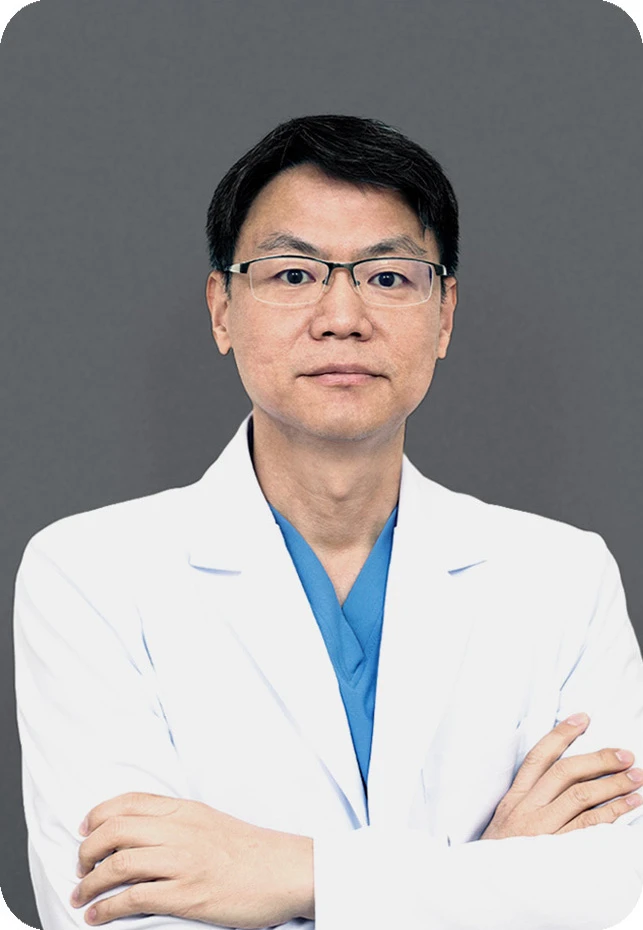 Anesthesiologist
Dr. Lee Woong-cheol
DL’s anesthesiology and pain-medicine specialist, listed separately from the clinic’s contouring surgeons.
Read the profile ↗Sources & further reading
Planning a consultation from the United States
Confirm the role of the named care professional, the treatment you want assessed, and how the clinic handles records and follow-up after your return. The Korean qualifications and clinic location described here do not establish U.S. licensure, U.S. insurance participation, or care availability near your home.
Prepare your U.S. follow-up plan →