Also listed as Sinsa Oral & Maxillofacial Surgery · SINSA ORAL & MAXILLOFACIAL SURGERY · 신사구강악안면외과 치과의원
Where is Sinsa OMS, and what does it treat?
Sinsa Oral & Maxillofacial Surgery is in Changwon, South Korea. Dr. Ji-woong Jung leads its oral and maxillofacial care, which includes jaw realignment and facial contouring. Patients should arrange consultations and recovery around Changwon and clarify whether their plan changes the jaw outline, the bite, or both before booking travel.
Location and specialty
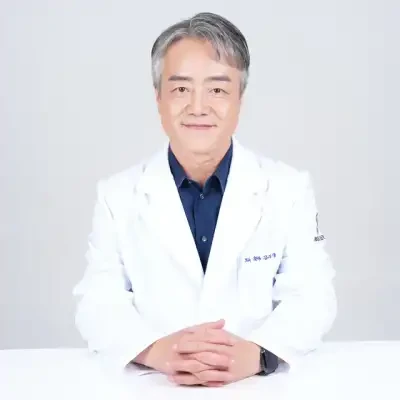
Sinsa Oral & Maxillofacial Surgery is in Changwon. Its name should not be mistaken for a Seoul location. The practice combines oral surgery, dental implants, orthognathic surgery and facial contouring. Its chief director, Dr. Ji-woong Jung, is an oral and maxillofacial surgery specialist. For a patient whose aesthetic concerns overlap with jaw alignment, this specialty offers a different consultation perspective from an exclusively cosmetic discussion.
Structure before silhouette
The clinic describes 3D CT planning and director-led surgical simulation. The useful question is how that planning changes your actual treatment: ask to see jaw relationships, asymmetry and the intended bone movements, not only a simulated surface image. If a tapered jaw is the goal, clarify whether the proposal changes the jaw’s outline, moves a jaw-bearing segment or combines both. Each approach has different implications for the bite and the recovery schedule.
Treatment pathways
The international site separates jaw realignment, cheekbone contouring, jaw and facial-bone surgery, and 3D CT planning. These are not interchangeable services. Cheekbone treatment changes the midface; a V-line plan concerns the lower face; orthognathic treatment changes jaw position. Bring a short list of the features you want to preserve as well as the features you want to change so that an assessment does not become an unnecessarily broad facial makeover.
Preparing for a functional assessment
Bring dental records if you have had orthodontics, implants, missing teeth or previous jaw surgery. Describe chewing discomfort, bite changes, jaw-joint symptoms and any sleep-related breathing concerns. Ask which findings require orthodontic input and whether dental treatment would happen before or after surgery. If your bite is already comfortable, ask the surgeon to explain why any proposed movement is necessary rather than assuming that a larger operation creates a better cosmetic result.
A travel plan for Changwon
Arrange accommodation and postoperative transport around the treating facility in Changwon. A Seoul-based itinerary can add unnecessary travel during the early follow-up period. Request the exact local examination schedule before booking onward transport. Ask where an urgent assessment would take place, how you would reach that service, and what written information you should carry if you need care at another hospital. The clinic’s international website is the appropriate starting point for English-language coordination.
Questions for the surgeon
Will the plan alter my bite? What are the alternatives if I want a less extensive operation? Which appointments must be in person? Who reviews healing after I return home? What happens if the CT findings change the initial estimate? Ask for a plan that connects each operation to a particular structural finding, with enough time to consider the answer before deciding.
A native Korean facial-bone program
Sinsa’s Korean facial-surgery page explicitly separates double-jaw surgery from cheekbone, mandibular-angle and chin contouring. Its planning description considers bone thickness, nerve location and anatomical boundaries when defining the area of surgery. The site also provides an indicative estimator by anatomical region, with the final estimate dependent on consultation. For an international patient, the clinically useful comparison is the complete treatment plan and its inclusions rather than a standalone price beside one bone region.
Dental context and continuity
The Korean clinician roster includes Dr. Jung as an oral and maxillofacial specialist and Dr. Jae-beom Cho as an integrated-dentistry specialist. Their roles are distinct. The facial-bone program and dental services sit within the same practice, which is relevant when teeth, implants or occlusion affect planning. The clinic describes its present Changwon practice as building on earlier work in Seoul and Shanghai. The current Korean address is the third floor of Emporium in Sangnam-dong, Seongsan-gu, Changwon.
Finding the Changwon entrance
The clinic’s Korean name is 신사구강악안면외과 치과의원. The published address is Emporium, third floor, 77-4 Sangnam-dong, Seongsan-gu, Changwon, Gyeongsangnam-do. The directions identify the building with LG Best Shop and CGV as landmarks. Keep the full Changwon address in your transport booking: the word Sinsa in the clinic name is not an instruction to travel to Sinsa Station in Seoul.
Appointment hours in Korea time
Sinsa lists Monday, Tuesday and Friday hours of 9 a.m. to 6:30 p.m.; Wednesday and Thursday hours extend to 8 p.m. Saturday hours are 9 a.m. to 2 p.m., and Sundays and public holidays are closed. A 12:30–2 p.m. lunch interval is also published. Confirm your actual appointment with the international team, especially when coordinating a consultation and onward travel on the same day.
A request is not a confirmed appointment
Sinsa’s Korean booking page accepts inquiries for both double-jaw surgery and facial contouring. It explicitly treats the submitted request as provisional and says the clinic will contact the patient to confirm it. The published appointment telephone number is 055-285-9990 in Korea. Use the international website linked here for your international inquiry, then obtain the agreed date, time and Changwon address in writing.
State whether your main concern is the lower-face outline, the chin, the bite or previous surgery. Ask whether your visit includes assessment by Dr. Jung, imaging and any separate dental review. A general booking request does not confirm a particular surgeon or an operation.
Further reading: www.sinsaoms.com ↗ · www.sinsaoms.com ↗
Clarify anesthesia and the recovery handover
The clinic’s Korean facial-surgery page describes 3D CT analysis for planning and on-site anesthesiology-specialist coverage for conscious sedation and general anesthesia. These are the clinic’s published arrangements, not a substitute for confirming the plan for your own operation. Ask which type of anesthesia is proposed, who will administer and monitor it, and who is responsible during the initial recovery period.
Before committing to treatment, request the observation arrangements, the number to use for an urgent postoperative concern, and the destination for an examination outside clinic hours. The appointment telephone number and published opening hours should not be assumed to provide a round-the-clock emergency service.
Further reading: www.sinsaoms.com ↗
Explore the care team
Sources & further reading
Planning a consultation from the United States
Confirm the role of the named care professional, the treatment you want assessed, and how the clinic handles records and follow-up after your return. The Korean qualifications and clinic location described here do not establish U.S. licensure, U.S. insurance participation, or care availability near your home.
Prepare your U.S. follow-up plan →